
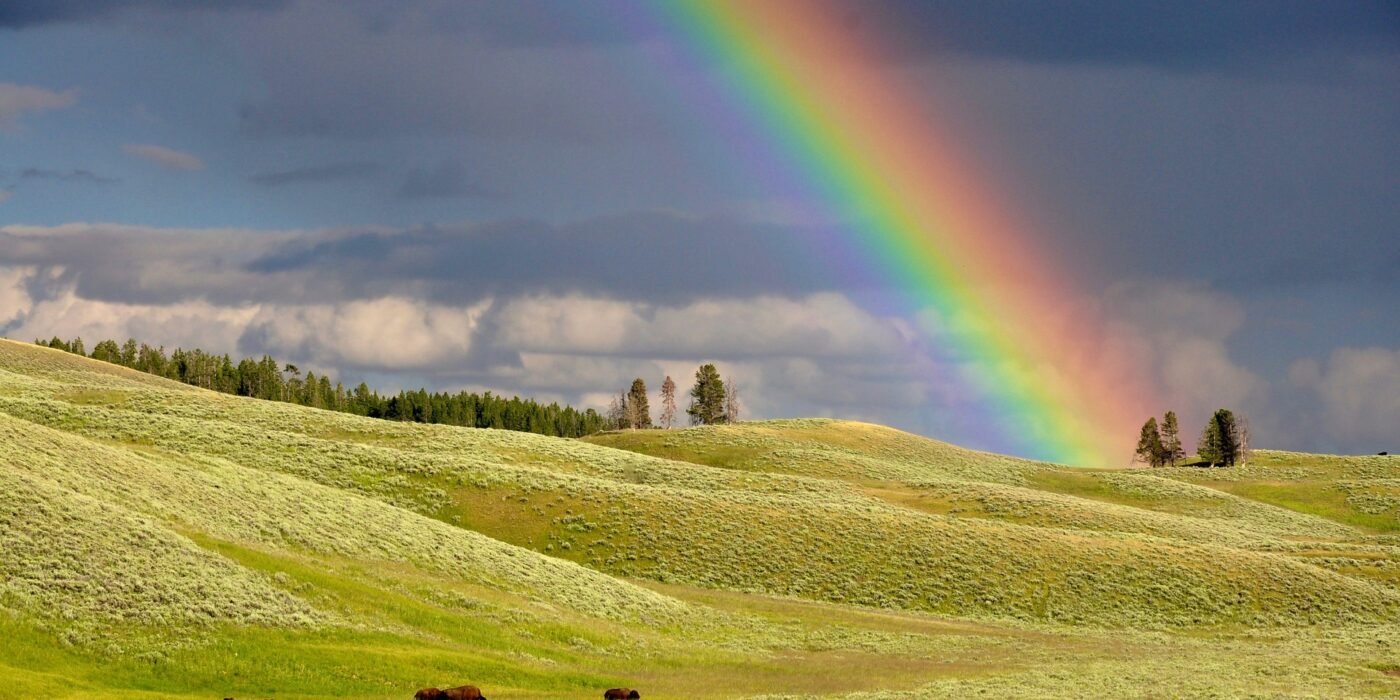
Rainbows happen when sunlight meets water droplets in the air, usually after a rain shower. These droplets act like tiny prisms. When sunlight enters a droplet, it bends (or refracts), then reflects off the back of the droplet, and bends again as it exits. This bending and bouncing separates the light into different colors.
Each droplet sends out a tiny beam of color in a specific direction. When millions of droplets do this all at once, your eyes catch the different colors at slightly different angles, creating a colorful arc in the sky. That’s why we see a full rainbow, with red on the outside and violet on the inside.
Rainbows are always in the opposite direction of the sun. So if the sun is behind you and rain is falling in front of you, that’s when you’ll most likely see one. It’s a perfect blend of science and wonder—light, water, and angles coming together to create nature’s most famous color show.
